

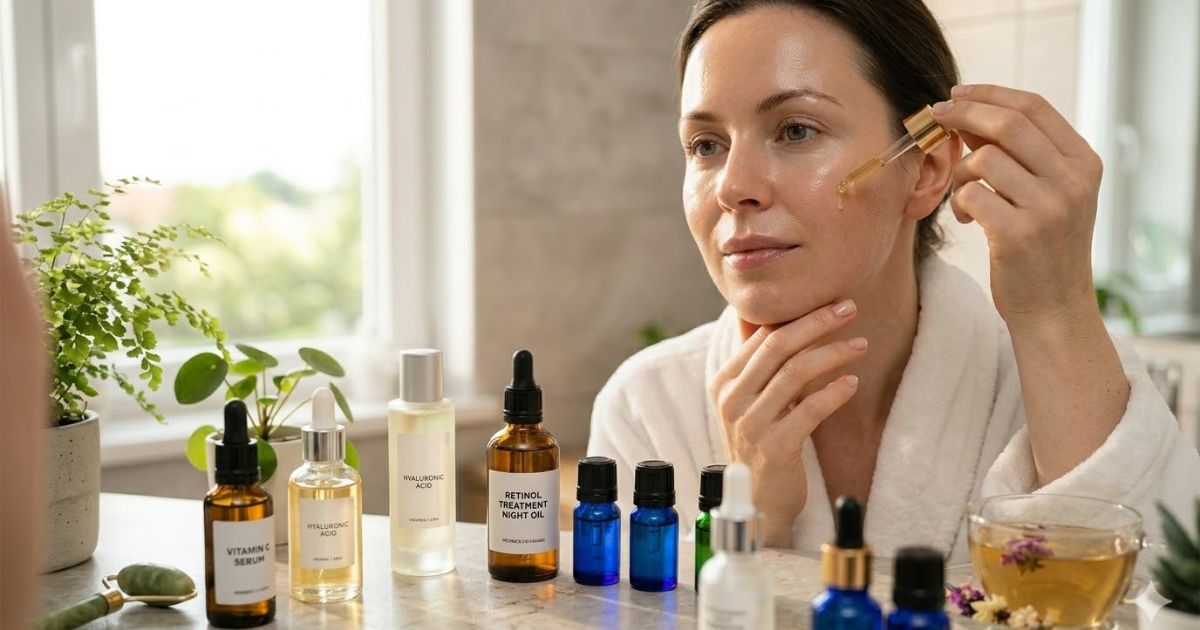
If you have spent any time researching skincare, you have probably come across words like niacinamide, salicylic acid, and resveratrol more times than you can count. These are what the skincare world calls “actives”, ingredients that are scientifically proven to create a visible change in the skin.
But knowing that an ingredient exists and knowing whether it is actually right for your skin are two very different things. Using the wrong active for your skin type can lead to irritation, breakouts, or simply no results at all. This guide breaks down five of the most popular skincare actives, what they do, and who should actually be using them.
Salicylic Acid: The One for Oily and Acne-Prone Skin
Salicylic acid is a beta-hydroxy acid (BHA) and one of the most well-researched ingredients in skincare for treating acne and congestion. What makes it stand out from other exfoliating acids is that it is oil-soluble, meaning it can actually get inside the pore and break down the sebum, dead skin cells, and debris that cause blackheads, whiteheads, and breakouts.
It also has mild anti-inflammatory properties, which help calm the redness and swelling around active spots.
Who should use it: Salicylic acid is best suited for oily, acne-prone, and combination skin types. If you regularly deal with clogged pores, blackheads, or recurring breakouts, this is one of the most effective ingredients you can add to your routine.
Who should be careful: People with dry or sensitive skin should use salicylic acid sparingly, as it can be drying with frequent use. Start with a low concentration (around 0.5 to 1%) and use it two to three times a week rather than daily.
Works well with: Niacinamide, azelaic acid, and lightweight non-comedogenic moisturisers.
Avoid pairing with: Retinol or other strong acids in the same routine, as this can cause over-exfoliation and irritation.
Niacinamide: The All-Rounder Almost Everyone Can Use
Niacinamide, also known as vitamin B3, is one of the most universally loved skincare ingredients for good reason. It is effective, well-tolerated, and addresses an impressive range of skin concerns without being aggressive on the skin.
Niacinamide deserves special attention, read a full breakdown of what niacinamide is and who should use it to understand its unique benefits and how it stacks against other actives.
Some of its key benefits include reducing the appearance of enlarged pores, regulating sebum production, fading dark spots and post-acne marks, strengthening the skin barrier, calming redness and inflammation, and improving overall skin texture and tone. It is also a great supporting ingredient, meaning it plays well with almost everything else in your routine.
Who should use it: Practically everyone. Niacinamide works for oily skin, dry skin, sensitive skin, acne-prone skin, and mature skin. It is one of the rare skincare ingredients that genuinely suits all skin types and skin tones.
Who should be careful: Very high concentrations of niacinamide (above 10%) can occasionally cause flushing or tingling in sensitive skin. Stick to a 5% concentration, which is where most of the research shows the best results with the least risk of irritation.
Works well with: Almost everything, including hyaluronic acid, salicylic acid, azelaic acid, and SPF.
Avoid pairing with: Very high concentrations of vitamin C in the same step, as this combination can sometimes reduce the effectiveness of both ingredients.
Azelaic Acid: The Calming Ingredient for Sensitive and Reactive Skin
Azelaic acid is a naturally occurring acid found in grains like wheat, rye, and barley. It has been used in dermatology for decades and is actually a prescription treatment for rosacea and acne in many countries. In lower concentrations, it is available in over-the-counter skincare and is an excellent option for people with easily irritated or reactive skin.
Its benefits include reducing redness and inflammation, fighting acne-causing bacteria, fading post-inflammatory hyperpigmentation (the marks left behind after spots), and gently exfoliating the surface of the skin without causing the sensitivity that stronger acids can trigger.
If hyperpigmentation is your concern, actives work best alongside a seasonal strategy — see how to manage hyperpigmentation in summer for a complete protocol.
Who should use it: Azelaic acid is ideal for people with sensitive skin, rosacea-prone skin, or those dealing with persistent redness. It is also excellent for skin of colour, as it is one of the safest ingredients for fading hyperpigmentation without any risk of post-inflammatory darkening that some stronger actives can cause.
Who should be careful: Azelaic acid is generally very well tolerated. Some people experience mild tingling when they first start using it, but this usually settles within a few days. Start with a lower concentration and build up gradually.
Works well with: Niacinamide, hyaluronic acid, and gentle moisturisers.
Avoid pairing with: Multiple strong exfoliating acids at the same time, as this can lead to over-exfoliation.
Tyrosinase Inhibitors: The Brightening Ingredients for Uneven Skin Tone
Tyrosinase inhibitors are a category of brightening ingredients that work by blocking tyrosinase, the enzyme responsible for melanin production in the skin. Less melanin activity means fewer dark spots, more even skin tone, and a brighter overall complexion over time.
Some of the most effective tyrosinase inhibitors you will find in skincare include:
- Kakadu plum – one of the richest natural sources of vitamin C in the world, with powerful brightening and antioxidant properties
- Mulberry root extract – a gentle but effective ingredient for reducing pigmentation and dark spots
- Alpha arbutin – a highly stable and well-researched brightening ingredient that works across a wide range of skin tones
- Kojic acid – derived from fungi, it is particularly effective on stubborn melasma and sun-induced pigmentation
- Tranexamic acid – one of the newer additions to the brightening category, with strong clinical evidence for reducing melasma and post-inflammatory hyperpigmentation
Who should use them: Anyone dealing with dark spots, sun damage, melasma, post-acne marks, or generally dull and uneven skin tone will benefit from incorporating tyrosinase inhibitors into their routine.
Who should be careful: These ingredients are generally very safe for all skin types, including sensitive skin. Some stronger ones like kojic acid can occasionally cause irritation at high concentrations, so it is always worth patch testing first.
Works well with: Vitamin C, niacinamide, and SPF (daily sun protection is essential when targeting pigmentation).
Resveratrol: The Antioxidant for Ageing and Environmental Damage
Resveratrol is a polyphenol antioxidant found naturally in red grapes, berries, and peanuts. It has been widely studied for its anti-ageing properties and is one of the most powerful antioxidants available in skincare today.
Antioxidants work by neutralising free radicals, unstable molecules produced by UV exposure, pollution, and other environmental stressors that damage skin cells and accelerate ageing. By keeping free radicals in check, resveratrol helps protect the skin from oxidative stress, which is one of the leading causes of fine lines, wrinkles, loss of firmness, and dullness.
Antioxidant actives like resveratrol are gaining attention, know why resveratrol is your summer skin buddy and how it complements other actives in your routine.
What makes resveratrol particularly appealing compared to vitamin C is that it is far more stable in formulation and does not oxidise or lose potency as quickly. It is also gentler on the skin, making it suitable for people who find high-concentration vitamin C serums too irritating.
Who should use it: Resveratrol is best suited for mature skin or anyone who is starting to see early signs of ageing like fine lines, loss of radiance, and uneven texture. It is also a great option for people who live in urban environments and are regularly exposed to pollution.
Who should be careful: Resveratrol is generally very well tolerated and suitable for most skin types, including sensitive skin. It is one of the gentler actives in the anti-ageing category.
Works well with: Ferulic acid (which significantly boosts the effectiveness of antioxidants), vitamin C, niacinamide, and SPF.
How to Introduce Actives Into Your Routine Without Overwhelming Your Skin
The biggest mistake people make with skincare actives is trying to use too many at once. Layering multiple strong ingredients can disrupt the skin barrier, cause irritation, and ironically make your skin concerns worse rather than better. Choosing actives is only one step, you also need to know how to choose the right serum for your skin type to ensure effective and safe delivery of these potent ingredients.
Here are a few simple rules to follow:
- Introduce one new active at a time and give your skin at least two to three weeks to adjust before adding another
- Always patch test a new product on the inside of your wrist or behind your ear before applying it to your face
- Start with lower concentrations and work up gradually as your skin builds tolerance
- Always use SPF during the day when using any active ingredient, especially AHAs, BHAs, vitamin C, and retinol
- If your skin feels irritated, red, or tight, scale back and give your skin a break before reintroducing the active
Finding the right combination of actives for your skin takes a little patience and experimentation, but once you land on a routine that works, the results are well worth it.
Building a routine around actives can feel overwhelming — these 5 skincare and wellness practices for your self-care routine provide a practical framework to layer them safely.
Get more such tips and news on NewTrendsHub