Most of us have never stopped to read the ingredient list on our deodorant. But if you do, you will find a long list of synthetic chemicals, aluminium compounds, and artificial fragrances that are increasingly drawing scrutiny from health-conscious consumers.
If you have been looking for a simpler, more natural alternative, the answer might already be sitting in your kitchen cupboard. Baking soda, yes the same one you use for baking and cleaning, is a surprisingly effective natural deodorant that has been used for decades. Here is how it works and five easy ways to use it.
Why Does Baking Soda Work as a Deodorant?
It is worth understanding the science before diving in. Body odour is not actually caused by sweat itself. It is caused by the bacteria on your skin breaking down the proteins in sweat. Baking soda works by creating an alkaline environment on the skin that bacteria struggle to thrive in, which neutralises odour at the source rather than simply masking it.
Here are some other reasons it is worth trying:
- It is free from aluminium, parabens, synthetic fragrances, and other ingredients found in most commercial deodorants
- It has no strong scent of its own, so you can use it as is or add your own fragrance with essential oils
- It is completely affordable and available in virtually every grocery store
- It is environmentally friendly with minimal packaging and no chemical runoff
5 Ways to Use Baking Soda as a Natural Deodorant
Method 1: Plain Baking Soda Application
The simplest method of all and a good starting point if you are new to natural deodorants.
What you need:
- Baking soda
How to use it:
- Make sure your underarms are clean and completely dry
- Take a small pinch of baking soda between your fingers
- Lightly pat it onto your underarms and let it settle for about a minute before getting dressed
This method is best for people with less sensitive skin as direct application of dry baking soda is the most concentrated form.
Method 2: Baking Soda and Water Paste
If plain powder feels too harsh or tends to flake, mixing it into a paste makes application smoother and easier to control.
What you need:
- 1 tablespoon baking soda
- Water
How to make it:
- Add water to the baking soda a few drops at a time and stir until it forms a smooth, spreadable paste
- You want a consistency that is thick enough to stay on the skin without dripping
How to use it:
- Apply a small amount to clean, dry underarms using your fingers
- Spread it gently and allow it to dry for a minute or two before putting on clothes
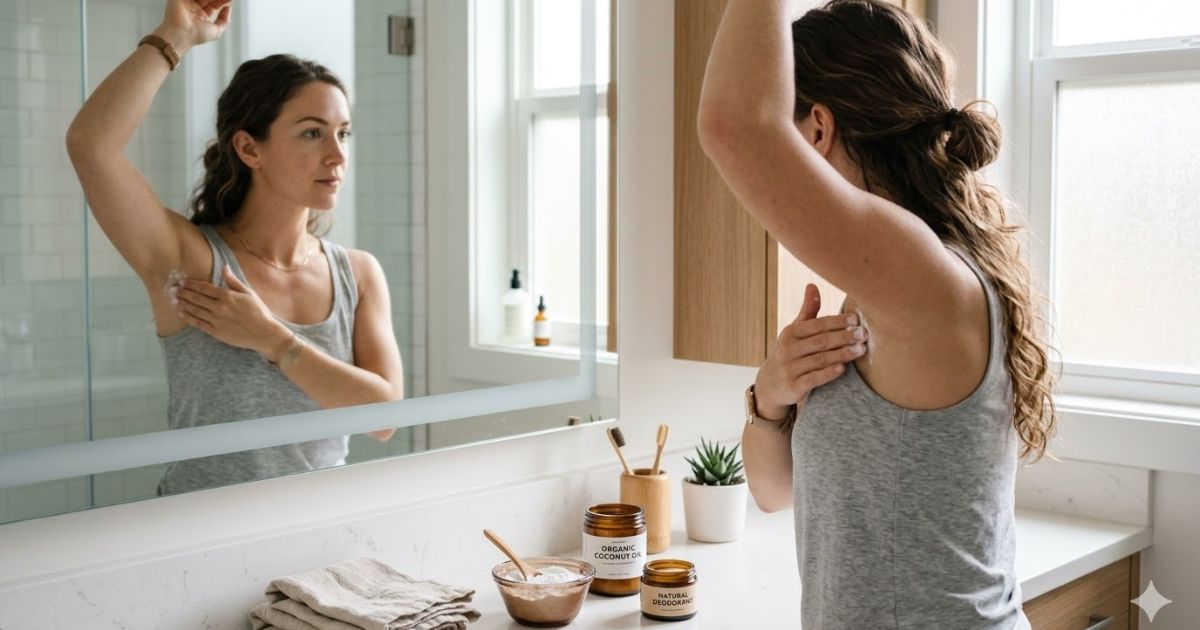
Method 3: Baking Soda with Coconut Oil
This is one of the most popular DIY natural deodorant formulas because coconut oil adds moisturising properties and makes the texture much more pleasant to apply. It also helps reduce the chance of irritation for those with sensitive skin.
What you need:
- 2 tablespoons baking soda
- 3 tablespoons coconut oil
- A few drops of your preferred essential oil (optional)
- A small jar for storage
How to make it:
- Mix the baking soda and coconut oil together in a bowl until well combined
- Add a few drops of essential oil if you want a light fragrance (lavender, tea tree, and lemon work particularly well)
- Transfer the mixture into a small jar
How to use it:
- Scoop a small amount with your fingertips and rub it into clean, dry underarms until absorbed
- Reapply as needed depending on your activity level
Note: coconut oil melts in warmer temperatures so store it in a cool place to maintain the right consistency.
Method 4: Baking Soda with Essential Oils
If you want a dry powder formula with a pleasant scent, combining baking soda with essential oils is a great option. It works similarly to the plain baking soda method but with the added antibacterial benefits of the essential oils.
What you need:
- 2 tablespoons baking soda
- 5 to 8 drops of your chosen essential oil (tea tree, lavender, peppermint, or eucalyptus all work well)
- A small jar or tin
How to make it:
- Add the essential oil drops to the baking soda and mix until the powder has absorbed the oil evenly
- Store in a small sealed container
How to use it:
- After showering, pat a small amount onto clean, dry underarms using your fingertips
- The essential oils provide additional antimicrobial properties alongside the baking soda
Method 5: Baking Soda Spray
A spray is the most convenient format for on-the-go use or for those who prefer not to apply anything with their fingers.
What you need:
- 1 tablespoon baking soda
- 1 cup water
- A small spray bottle
How to make it:
- Pour the water into the spray bottle
- Add the baking soda and close the bottle
- Shake well to dissolve
How to use it:
- Shake the bottle before each use as the baking soda will settle at the bottom
- Spray lightly onto underarms and allow it to dry completely before getting dressed
- This formula is the most diluted of the five methods, making it the gentlest option for sensitive skin
Tips for Getting the Best Results
A few things to keep in mind to make sure whichever method you choose works effectively:
- Start with a small amount. Baking soda is alkaline and using too much can cause skin irritation, especially in the sensitive underarm area. Less is more.
- Always do a patch test first. Apply a small amount to the inside of your wrist and wait 24 hours before using it on your underarms, particularly if you have sensitive skin.
- Apply to clean, dry skin. Baking soda works best when applied right after showering once the skin is fully dry.
- Listen to your skin. If you experience persistent redness, itching, or irritation, stop use and try a more diluted method or consider an alternative natural deodorant.
- Store properly. Keep your baking soda deodorant in a cool, dry place. Moisture can cause clumping and affect the texture.
Final Thoughts
Baking soda is a genuinely effective, affordable, and chemical-free alternative to commercial deodorants. It might take a little trial and error to find the method and consistency that works best for your skin, but once you do, it is a refreshingly simple swap to make.
If you find that your skin is too sensitive for baking soda on its own, look for natural deodorant products that use baking soda in a balanced, skin-friendly formulation alongside soothing ingredients like shea butter or aloe vera.
Frequently Asked Questions
For most people, yes. Baking soda is a natural ingredient and is generally well-tolerated when used in small amounts. However, people with sensitive skin or a disrupted skin barrier may find it irritating. Always start with the most diluted method and do a patch test first.
No, baking soda itself does not cause underarm darkening. Darkening in that area is typically caused by friction, shaving, or certain chemical deodorants. Baking soda is unlikely to be a contributing factor.
Generally around six to eight hours for most people, though this varies depending on activity level, body chemistry, and how much you sweat. People who are very active may need to reapply once during the day.
It can be, but with caution. Lemon juice is acidic and when combined with baking soda the two partially neutralise each other. Applying lemon juice directly to the underarms can also make skin more sensitive to sunlight, so it is best avoided before sun exposure.
Yes, it can for some people. Its alkaline nature can disrupt the skin’s natural pH balance if used too frequently or in high concentrations. If you notice any redness, itching, or a rash, dilute the formulation further or switch to a gentler natural deodorant option.
Get more such tips and news on NewTrendsHub