More people than ever are paying close attention to what goes into their personal care products, and deodorant is no exception. Given that it is applied to the underarm area every single day, often right after shaving when skin is most absorbent and sensitive, the ingredient list matters more than most people realise.
Natural deodorants have come a long way in terms of formulation and effectiveness, but not all of them are created equal. The difference between a natural deodorant that actually works and one that leaves you feeling let down often comes down to the specific ingredients inside it.
Here are the eight essential ingredients to look for when choosing the best natural deodorant.
Importance of choosing the right ingredients in natural deodorants
- Choosing the right ingredients for your natural deodorants is super important because it’s like picking the perfect toppings for your pizza.
- When you go for natural deodorants, you’re saying no to chemicals but not all natural deodorants are made equal, some might still have ingredients that can irritate your skin or make you smell not-so-fresh.
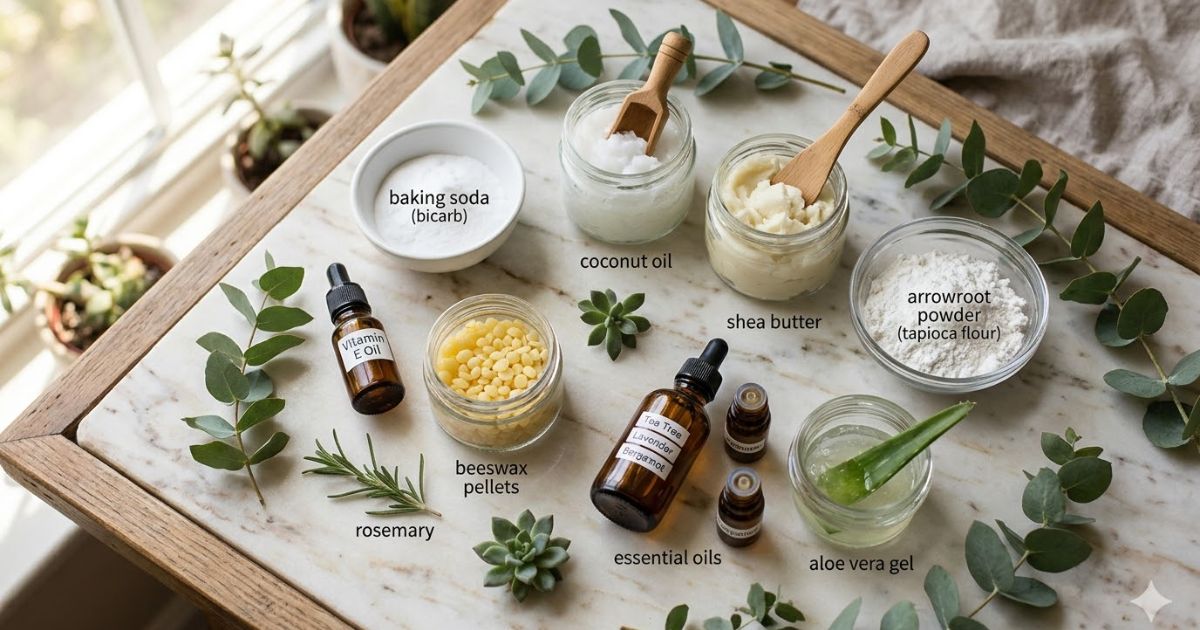
- You gotta pay attention to what’s inside your natural deodorant for women and men. Ingredients like baking soda, arrowroot powder, and coconut oil fight off stinkiness and keep you feeling dry and comfy.
- Some ingredients might not agree with your skin, so it’s smart to do a little detective work before slathering stuff on your pits.
- Choosing the right ingredients means you’ll smell great, feel fresh, and keep your skin happy.
The same ingredient literacy applies to your full skincare stack, 5 common skincare actives and who should use them is an excellent companion guide to understanding ingredient safety more broadly.
The Top 8 Ingredients in the Best Natural Deodorants
1. Baking Soda
Baking soda is one of the most effective natural odour-fighting ingredients available. It works through a simple but powerful mechanism: it is alkaline, which neutralises the acidic compounds produced by odour-causing bacteria on the skin. By disrupting the chemical environment that bacteria need to produce smell, baking soda keeps you fresh without any synthetic chemicals.
It is worth noting that baking soda can be too alkaline for some people, particularly those with sensitive skin, causing redness or irritation with regular use. If this happens, look for formulations that use a lower concentration of baking soda or pair it with buffering ingredients that reduce its alkalinity. Alternatively, magnesium hydroxide-based formulas are a gentler option for sensitive skin that still delivers effective odour control.
Baking soda is one of the most discussed natural deodorant ingredients, discover its practical applications in these 5 ways to use baking soda as a natural deodorant.
2. Arrowroot Powder
Arrowroot powder is derived from the root of the arrowroot plant and is valued in natural deodorant formulations for its exceptional moisture-absorbing properties. It draws excess sweat away from the skin surface, keeping the underarm area dry and comfortable without blocking sweat glands the way aluminium compounds do.
Beyond moisture absorption, arrowroot powder improves the texture of deodorant formulations significantly. It gives natural deodorants a smooth, silky feel that applies evenly and sits comfortably on the skin without the chalky or gritty residue that some powder-based formulas leave behind. It is also extremely gentle, making it well-suited for sensitive skin types.
3. Coconut Oil
Coconut oil earns its place in natural deodorant formulations through its well-documented antibacterial properties. Its high concentration of lauric acid is particularly effective at disrupting the cell membranes of odour-causing bacteria, reducing their presence on the skin and keeping body odour under control.
It also serves as a nourishing skin conditioner, keeping the underarm area soft and moisturised rather than dried out. In solid or balm-format deodorants, coconut oil contributes to the smooth, creamy texture that makes application comfortable and even.
One caveat: people with very oily skin or a known sensitivity to coconut oil may find it too rich for underarm use. In these cases, a gel-based formula without coconut oil is a better fit.
4. Shea Butter
Shea butter is rich in vitamins A and E as well as essential fatty acids that deeply nourish and condition the skin. In natural deodorant formulations, it serves primarily as a skin conditioner and base ingredient that makes application smooth and comfortable.
Beyond moisturisation, shea butter has natural anti-inflammatory properties that help soothe redness and irritation, making it particularly valuable for people who experience sensitivity in the underarm area. It is also a good choice for those whose skin has been irritated by conventional deodorants and needs a period of recovery and gentle care.
5. Essential Oils
Essential oils serve a dual purpose in natural deodorants. They provide natural fragrance without the synthetic chemical compounds found in conventional parfum, and many of them have genuine antibacterial properties that contribute to odour control.
Some of the most commonly used and effective essential oils in natural deodorants include:
- Tea tree oil – one of the most potent natural antimicrobials available, highly effective against the bacteria responsible for body odour
- Lavender oil – has mild antibacterial properties and a calming effect on the skin, as well as a universally appealing scent
- Peppermint oil – provides a pleasant cooling sensation and has antibacterial properties
- Lemon or citrus oils – naturally fresh-smelling and effective at neutralising odour compounds
Essential oils should always be used at appropriate concentrations in formulations. When used correctly, they are safe and effective. At very high concentrations they can cause skin sensitisation, so a well-formulated product will balance efficacy with skin safety.
6. Beeswax or Candelilla Wax
Wax is what gives solid and balm-format natural deodorants their structure and consistency. Without it, the other ingredients would simply melt into a greasy mess at room temperature.
Beeswax creates a light, breathable barrier on the skin that helps lock in moisture and gives the deodorant a smooth, glide-on texture. It is a natural emollient that conditions the skin as well as providing structural integrity to the formula.
Candelilla wax is a plant-derived alternative sourced from the candelilla shrub, making it the preferred option for vegan formulations. It has a slightly higher melting point than beeswax, which actually makes it more stable in warmer climates, and it performs comparably in terms of texture and skin feel.
7. Cornstarch
Cornstarch works similarly to arrowroot powder as a moisture absorber, helping to keep the underarm area dry and comfortable throughout the day. It draws excess moisture away from the skin surface without interfering with the body’s natural sweating process.
An additional benefit of cornstarch is its ability to reduce friction between skin surfaces. In areas where skin rubs together, it creates a soft, smooth buffer that prevents chafing and irritation, which makes it a particularly valuable ingredient during warmer months or for people who are more physically active.
8. Magnesium Hydroxide
Magnesium hydroxide is one of the newer additions to natural deodorant formulations and is gaining recognition as one of the most effective alternatives to baking soda, particularly for sensitive skin.
It works by raising the pH of the skin surface to a level that is inhospitable to the bacteria responsible for producing body odour. Unlike baking soda, which can be too alkaline for some skin types, magnesium hydroxide achieves this effect at a gentler pH range, making it better tolerated by sensitive and reactive skin.
Crucially, magnesium hydroxide does not block sweat glands or prevent perspiration. It purely addresses the bacterial activity that causes odour, which makes it one of the cleanest and most physiologically respectful odour-control ingredients in natural deodorant formulation today.
Understanding ingredients deepens the case for the switch which is why natural deodorants are genuinely better and healthier for you compared to conventional antiperspirant formulas.
How to Read a Natural Deodorant Label
Now that you know what to look for, here are a few practical tips for evaluating a natural deodorant before buying:
- Look for at least one active antibacterial ingredient such as baking soda, magnesium hydroxide, or tea tree oil to ensure genuine odour protection
- Check for a moisture-absorbing ingredient like arrowroot powder or cornstarch if staying dry is a priority for you
- If you have sensitive skin, prioritise formulas with magnesium hydroxide over baking soda and look for fragrance-free or lightly scented options
- Scan for unnecessary fillers, synthetic preservatives, or hidden synthetic fragrances listed as “parfum” or “fragrance,” which can undermine the benefits of an otherwise natural formula
Once you know what ingredients to look for, use this knowledge to evaluate the 7 best natural deodorants for women, all of which score well on these ingredient criteria.
Final Thoughts
The effectiveness of a natural deodorant comes down almost entirely to its ingredients. A well-formulated natural deodorant with the right combination of odour-neutralising, moisture-absorbing, and skin-nourishing ingredients genuinely works and is a more skin-friendly choice than conventional alternatives loaded with synthetic chemicals.
Next time you are shopping for a natural deodorant, use this list as your guide. The right ingredients are not just about smelling good, they are about taking care of your skin every single day.
Frequently Asked Questions
The most common active ingredient in natural deodorants is baking soda, which neutralises odour-causing bacteria through its alkaline properties. Other effective active ingredients include magnesium hydroxide, zinc lactate, and tea tree oil, all of which control odour through different but equally valid mechanisms.
It depends on your skin type and priorities. For most people, an antibacterial active like baking soda or magnesium hydroxide is the most critical component for effective odour control. For sensitive skin, magnesium hydroxide is typically the better choice as it delivers comparable odour protection with less risk of irritation.
Odour is stopped primarily by ingredients that either neutralise acidic odour compounds or inhibit the bacteria that produce them. Baking soda, magnesium hydroxide, zinc lactate, tea tree oil, and certain other essential oils all address odour through one or both of these mechanisms.
Tea tree oil is the most potent natural antimicrobial essential oil and is highly effective against odour-causing bacteria. Lavender is a close second, offering both antibacterial properties and a pleasant, widely appealing scent. The best choice ultimately depends on your scent preference and skin sensitivity.
Strictly speaking, most natural deodorants are not antiperspirants as they do not block sweat glands. If staying dry is important to you, look for natural deodorants with higher concentrations of arrowroot powder or cornstarch, which absorb moisture effectively without the use of aluminium compounds.
Get more information at NewTrendsHub!