Natural deodorants have gone from a niche wellness product to a mainstream staple in a surprisingly short time. More people than ever are making the switch, driven by growing awareness about the ingredients in conventional deodorants and a broader shift toward cleaner personal care.
But the question everyone wants answered before making that switch is a simple one: do they actually work?
In this post, we are breaking down exactly how natural deodorants compare to conventional ones, what the real health concerns are, and what you need to know to make the switch successfully.
The Health Concerns Around Conventional Deodorants
Before diving into whether natural deodorants work, it is worth understanding why so many people are looking for alternatives in the first place.
Aluminium compounds Most conventional antiperspirants contain aluminium salts as their active ingredient. These compounds work by temporarily blocking sweat ducts to reduce perspiration. The concern is that aluminium is absorbed through the skin and some studies have suggested a possible link between aluminium exposure and hormonal disruption, though the research is still ongoing and not conclusive.
Parabens Parabens are preservatives used in many personal care products to extend shelf life. They have been identified as endocrine disruptors, meaning they can mimic oestrogen in the body. While the concentrations used in cosmetics are generally considered low, many people prefer to avoid them altogether given the potential long-term implications of daily exposure.
Artificial fragrances Fragrance is one of the most common causes of contact dermatitis and skin irritation. The term “fragrance” on a label can represent dozens of undisclosed chemicals, some of which are known allergens or irritants.
Triclosan An antibacterial agent found in some deodorants, triclosan has raised concerns due to its potential to disrupt thyroid function and contribute to antibiotic resistance. It has been banned from certain product categories in several countries.
The underarm area is particularly sensitive because the skin there is thin, there are lymph nodes nearby, and shaving can create micro-abrasions that increase absorption. This is why many dermatologists and health-conscious consumers prefer to keep the ingredients applied there as clean and simple as possible.
Are Natural Deodorants Actually Effective?
Yes, they can be, but with some important nuance.
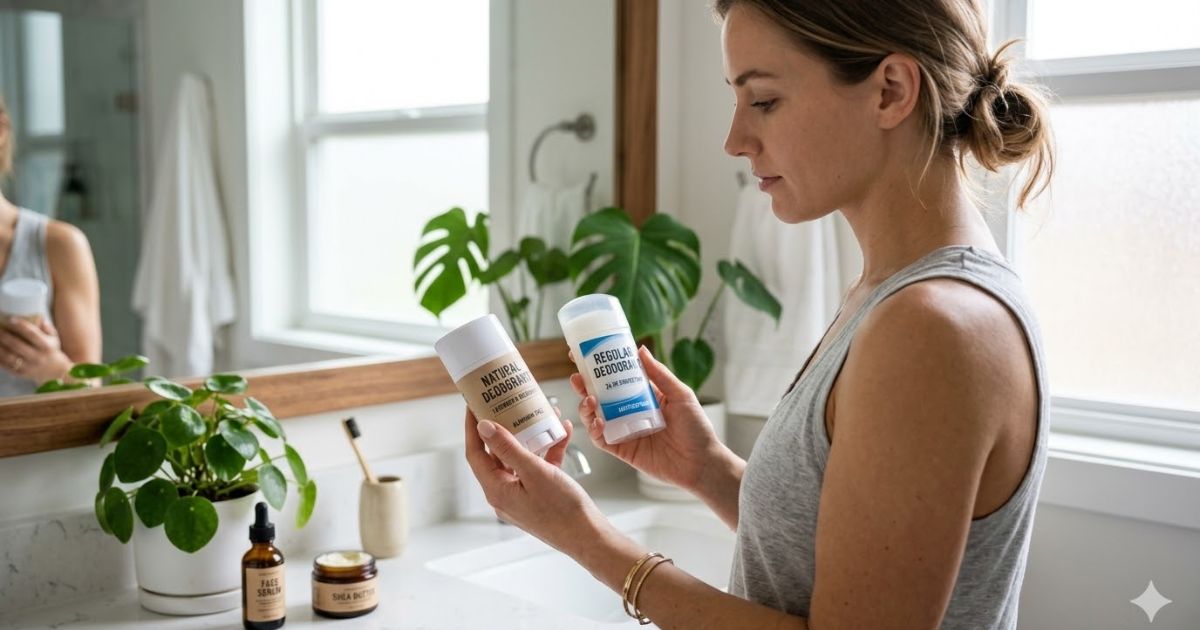
The key distinction to understand is that natural deodorants and conventional antiperspirants do two different things. Antiperspirants block sweat. Natural deodorants do not. Sweating is a natural and necessary bodily function, and natural deodorants work by neutralising the bacteria that cause sweat to smell rather than preventing sweat altogether.
Common active ingredients in natural deodorants include:
- Baking soda – creates an alkaline environment that bacteria struggle to survive in, effectively neutralising odour at the source
- Magnesium hydroxide – a gentler alternative to baking soda that works similarly without the irritation some people experience with baking soda-based formulas
- Prebiotic ingredients – support the skin’s natural microbiome, encouraging a healthy balance of bacteria that keeps odour under control without disrupting the skin
- Coconut oil – has natural antibacterial properties and doubles as a moisturiser for the delicate underarm skin
- Essential oils – provide natural fragrance while also offering antibacterial and antimicrobial benefits
- Zinc – an effective odour-neutralising mineral that is increasingly used in modern natural deodorant formulations
For the majority of people, a well-formulated natural deodorant is more than capable of keeping odour under control throughout a normal day. Where they tend to perform differently from conventional antiperspirants is during periods of intense physical activity, extreme heat, or high stress, when sweat volume increases significantly.
Factors That Influence How Well Natural Deodorants Work
Natural deodorants do not perform the same way for every person. Several individual factors affect how effective they will be for you:
Body chemistry Everyone’s sweat composition is slightly different. Some people naturally produce more odour-causing bacteria than others, which means some people will find natural deodorants completely sufficient while others may need a stronger formula or more frequent reapplication.
Diet What you eat directly affects how you smell. Diets high in red meat, processed foods, garlic, and onions tend to produce stronger body odour. Eating a diet rich in fruits, vegetables, and whole grains can make natural deodorants noticeably more effective.
Activity level If you exercise heavily or have a physically demanding job, you will sweat more than someone with a sedentary routine. Natural deodorants can still work well for active people but may require reapplication after exercise.
Climate Heat and humidity increase sweating, which puts more demand on any deodorant. In warmer months or climates, you may find you need to reapply your natural deodorant more often than you would in cooler conditions.
Transition period This is perhaps the most important factor that catches people off guard. When you switch from a conventional antiperspirant to a natural deodorant, your body goes through an adjustment period that typically lasts two to four weeks. During this time, the sweat glands that were previously blocked begin to function normally again and the underarm microbiome rebalances. Many people experience increased sweating and odour during this phase and assume the natural deodorant is not working. It is, but your body needs time to recalibrate.
Common Myths About Natural Deodorants
Myth 1: Natural deodorants do not work at all This is the most persistent myth and it is simply not accurate. Natural deodorants work differently from antiperspirants but they are genuinely effective at controlling odour for most people. The key is finding the right formula for your body chemistry and giving it enough time to work.
Myth 2: They are only for a specific type of person Natural deodorants are not reserved for any particular lifestyle or demographic. Anyone who wants to reduce their exposure to potentially harmful chemicals and support their skin’s natural biology can use them. They are increasingly popular across a wide range of people who simply want cleaner, simpler products in their daily routine.
Myth 3: You will smell worse using a natural deodorant During the transition period, yes, you might notice more odour than usual. But once your body adjusts, the vast majority of people find their odour levels normalise and are well-managed by a good natural formula.
Tips for Using Natural Deodorants Effectively
Getting the best results from a natural deodorant comes down to a few simple habits:
Apply to clean, dry skin Natural deodorants adhere and perform best on freshly cleansed underarms. Applying to skin that is damp or has residue from a previous application reduces effectiveness.
Use the right amount A thin, even layer is all you need. Over-applying does not make the deodorant more effective and can actually cause product buildup that leads to irritation or clothing staining.
Be patient through the transition Give your body at least three to four weeks before making a judgment about whether a natural deodorant is working for you. What feels like failure during the transition period is usually just your body adjusting.
Check the ingredients for potential irritants Baking soda is one of the most effective odour-neutralising ingredients in natural deodorants, but it can cause irritation or a rash for some people, particularly those with sensitive skin. If you experience irritation, look for a baking soda-free formula that uses magnesium hydroxide or prebiotic ingredients instead.
Reapply when needed There is no rule that says deodorant can only be applied once a day. If you are heading into a meeting after a workout or know you have a long, hot day ahead, reapplying is completely fine and keeps you feeling confident.
Final Thoughts
Natural deodorants are a legitimate and effective alternative to conventional antiperspirants for most people. They work differently, they require some adjustment, and they may not be the right fit for everyone’s lifestyle, but for the majority of people who make the switch thoughtfully and give it time, they work well.
If you are concerned about the long-term effects of aluminium, parabens, or synthetic fragrances on your health, switching to a natural deodorant is a simple and meaningful step you can take. Find a formula that suits your skin type, commit to the transition period, and give your body the chance to find its new normal.
Frequently Asked Questions
It depends on what you are prioritising. Natural deodorants avoid potentially harmful chemicals like aluminium and parabens, making them a preferable choice for people focused on cleaner ingredients. In terms of odour control alone, both can be effective, though conventional antiperspirants have the added function of reducing sweating which natural deodorants do not offer.
The main drawbacks are that they do not prevent sweating the way antiperspirants do, they may require reapplication during particularly active or hot days, and the transition period can be uncomfortable for some people. Baking soda-based formulas can also cause irritation in those with sensitive skin.
Most natural deodorants provide effective odour control for around 8 to 12 hours under normal conditions. Activity level, climate, and individual body chemistry all affect how long that protection lasts.
The main benefits include reduced exposure to aluminium and parabens, gentler ingredients that are less likely to irritate sensitive skin, and supporting the skin’s natural microbiome rather than disrupting it. Many people also notice their underarm skin feels healthier and less prone to irritation after making the switch.
Yes, completely normal. This is part of the transition period as your body adjusts to not having sweat glands blocked by aluminium compounds. The adjustment typically takes two to four weeks, after which odour levels usually normalise.
Get more such tips and news on NewTrendsHub