
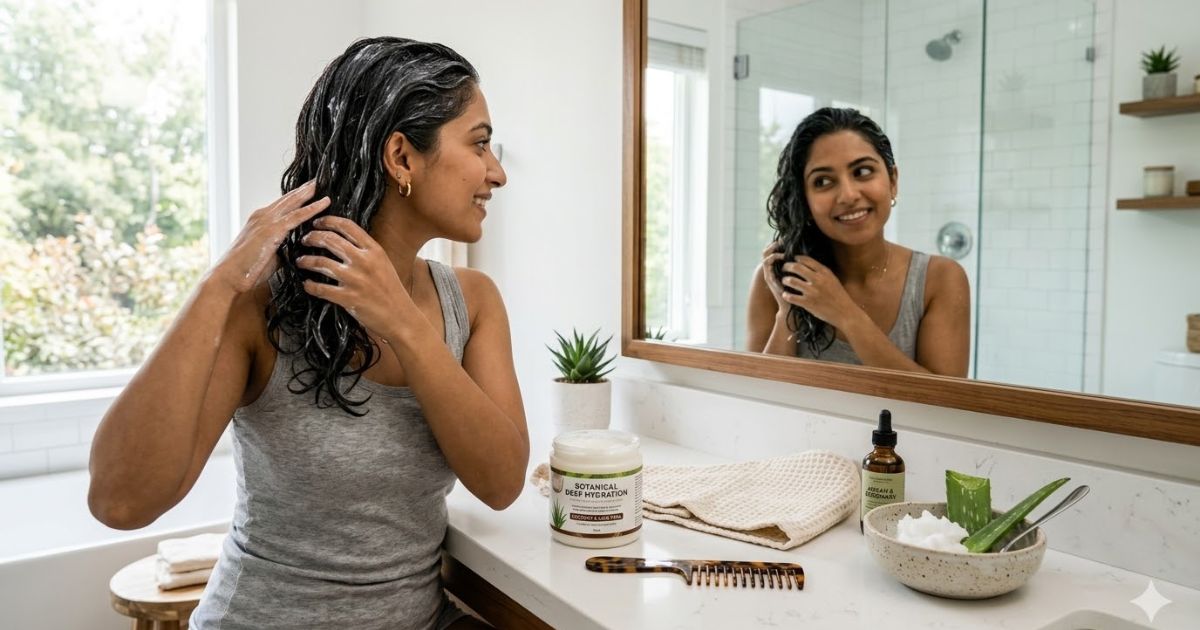
If your hair has been feeling dry, dull, or just not quite right lately, deep conditioning might be exactly what it needs. It is one of the most effective treatments you can do for your hair and the best part is you do not need a salon appointment or expensive equipment to do it properly.
In this blog, we are walking you through exactly how to deep condition your hair at home in five simple steps and get results that genuinely rival a professional treatment.
What is Deep Conditioning?
Deep conditioning is a more intensive version of your regular conditioner. While standard conditioners work primarily on the surface of the hair to smooth the cuticle and add moisture, deep conditioners are formulated with richer, heavier ingredients that penetrate the hair shaft itself.
A good deep conditioner is typically packed with proteins, humectants, and emollients that work together to repair damage, restore moisture balance, improve elasticity, and add shine. Think of it as a concentrated dose of nourishment that your hair absorbs over time rather than in the few minutes a regular conditioner is left on during a shower.
Step 1: Prepare Your Hair
The foundation of an effective deep conditioning treatment is starting with clean hair. Product buildup, excess oil, and environmental residue all create a barrier on the hair shaft that prevents the deep conditioner from absorbing properly. Wash your hair with a gentle, sulphate-free shampoo before you begin to make sure the cuticle is clear and ready to receive the treatment.
After washing, gently squeeze the excess water from your hair with a soft towel. You want your hair to be damp rather than dripping wet. Damp hair has slightly raised cuticles which actually helps the conditioner penetrate more effectively, but too much water can dilute the product and reduce its impact.
If your hair is particularly dry or prone to damage, consider pre-pooing before your wash. This simply means applying a light oil like coconut, argan, or jojoba oil to dry hair before shampooing. It creates a protective layer that prevents the shampoo from stripping too much of the hair’s natural moisture during cleansing.
Step 2: Apply the Deep Conditioner
With clean, damp hair ready to go, take a generous amount of your deep conditioner and distribute it evenly through your hair. The amount you use will depend on your hair length and thickness, but err on the side of more rather than less. This is not a step to be sparing with.
Work the conditioner through from mid-length to the ends first, as these sections tend to be the driest and most damaged. Then work your way upward. If you have a dry scalp, you can apply it there too, but if your scalp is naturally oily, keep the focus on the lengths and ends to avoid weighing the roots down.
Use a wide-tooth comb to gently distribute the product evenly through every section of hair. This ensures no strand is missed and helps with even penetration.
Step 3: Activate with Heat
Heat is what separates a truly effective deep conditioning treatment from simply leaving conditioner on for a long time. Warmth causes the hair cuticle to open slightly, allowing the conditioning ingredients to penetrate deeper into the cortex of the hair shaft rather than just sitting on the surface.
Once the conditioner is applied, cover your hair with a shower cap or wrap it in a warm towel. The shower cap traps your body heat, which is often enough for most hair types. For extra intensity, you can warm the towel in a dryer for a few minutes before wrapping or use a hooded hair dryer on a low heat setting.
If you are using a handheld blow dryer, hold it at a distance and keep it moving. You want gentle, even warmth rather than concentrated heat on any one area. High heat can actually damage the hair and counteract the benefits of the treatment.
Step 4: Leave It On Long Enough
The amount of time you leave the conditioner on directly affects how well it works. As a general guide, 20 to 30 minutes is the sweet spot for most hair types. This gives the ingredients enough time to fully absorb without oversaturating the hair, which can lead to a limp, weighed-down feeling.
If you are using heat, you can achieve good results in as little as 15 minutes since the warmth accelerates the absorption process. Without heat, leaning toward the 30-minute mark will give you better results.
Some people choose to leave a deep conditioner on overnight for a more intensive treatment. This can work very well for extremely dry or damaged hair but use a shower cap to protect your bedding and opt for a protein-free formula if doing this regularly, as too much protein overnight can cause brittleness over time.
There is no universal answer here. Pay attention to how your hair feels after each treatment and adjust the timing based on what it responds to best.
Step 5: Rinse Thoroughly and Finish
Rinsing properly is just as important as the application. Use cool or lukewarm water rather than hot water to rinse out the conditioner. Cool water helps seal the hair cuticle back down after treatment, locking in the moisture and giving the hair a smoother, shinier finish.
Take your time rinsing to make sure every trace of the conditioner is removed. Leaving residue in the hair can make it feel heavy and greasy rather than soft and nourished.
Once rinsed, gently squeeze out the water and avoid rubbing with a towel. Pat dry instead, or use a microfibre towel to reduce friction and frizz.
If you want to maximise the results even further, finish with a small amount of leave-in conditioner or a lightweight hair serum applied to damp hair before air drying. This seals in the moisture from the deep conditioning treatment and provides additional protection as the hair dries.
How Often Should You Deep Condition?
The right frequency depends entirely on your hair type and its current condition.
Dry, damaged, or colour-treated hair benefits most from weekly deep conditioning sessions. These hair types have a compromised cuticle that loses moisture quickly and needs regular intensive replenishment to stay healthy.
Normal or moderately healthy hair typically does well with deep conditioning every two weeks. This is enough to maintain moisture balance and shine without overdoing it.
Fine or naturally oily hair may only need a monthly deep conditioning treatment. Too frequent conditioning can weigh fine hair down and make it look flat.
The best indicator is always how your hair feels. If it is soft, bouncy, and manageable, you are on the right schedule. If it is feeling dry, rough, or breaking easily, it is time for a treatment regardless of when the last one was.
Final Thoughts
Deep conditioning is one of the simplest and most impactful things you can do for your hair at home. It does not require professional-grade equipment or a long list of products. All it takes is the right conditioner for your hair type, clean damp hair, a little heat, and enough time to let the treatment work.
Do it consistently and your hair will respond. You will notice the difference in how it feels, how it behaves during styling, and how it looks over time.
Frequently Asked Questions
Regular conditioner is designed for quick use in the shower. It smooths the cuticle, reduces static, and makes the hair easier to detangle but does not penetrate deeply into the hair shaft. Deep conditioner is a more concentrated, richer formula that is left on for an extended period and is formulated to penetrate the hair shaft to repair damage and restore moisture from within.
Absolutely. Deep conditioning is beneficial for all hair types including straight hair. It improves softness, manageability, and shine while reducing breakage and split ends regardless of texture or curl pattern.
Once a week works well for most people, particularly those with dry or damaged hair. If your hair is in good condition, every two weeks is sufficient. Fine or oily hair types may find once a month is plenty. The key is consistency rather than frequency.
Get more information at NewTrendsHub!